I spend most of my time thinking about the environmental consequences of digging things out of the ground. My work sits at the intersection of sustainable development and metal supply chains. Mining, mineral processing, metal production and increasingly, what happens to those metals afterwards.
I trained as an environmental engineer, drifted into life cycle assessment in the context of the minerals sector, and never really left. We’re about to mine an enormous amount of material in the name of decarbonisation, and it seems worth understanding what that costs beforehand rather than after.
The questions I keep returning to sound simple and aren’t. How much water does mining actually use, and what is the impact of this? What happens to energy and emissions as copper ore grades decline? Is there enough copper, lithium and cobalt for the energy transition, and what will it take from the places we take it from? And how much of the answer changes if we get serious about circularity and keeping metals in use? The honest answer is usually it depends. Most of my research is an attempt to say precisely what it depends on, and how confidently. Or at least expand our known unknowns.
A few things my collaborators and I have found:
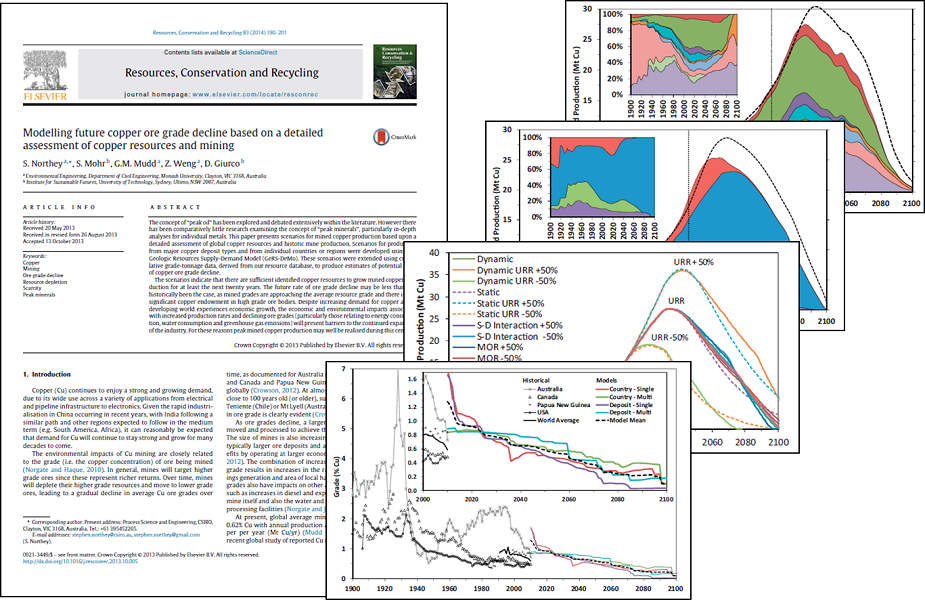
- Copper supply is more constrained than demand-side projections assume. Modelling ore grade decline against a detailed assessment of global deposits produced supply scenarios that diverge sharply from conventional demand-driven forecasts (Resources, Conservation and Recycling, 2014). Deriving resource-to-production relationships from operating mines puts an upper limit on primary supply of roughly 22–27 Mt Cu/year from defined reserves and 59–69 Mt Cu/year from all known resources, assuming every deposit could be mined at once (Mineral Economics, 2026). The complexity behind these types of findings led me to design and code the Primary Exploration, Mining and Metal Supply Scenario (PEMMSS) model, which evaluates uncertain metal supply futures on a mine-by-mine, deposit-by-deposit basis (RCR Advances, 2023).
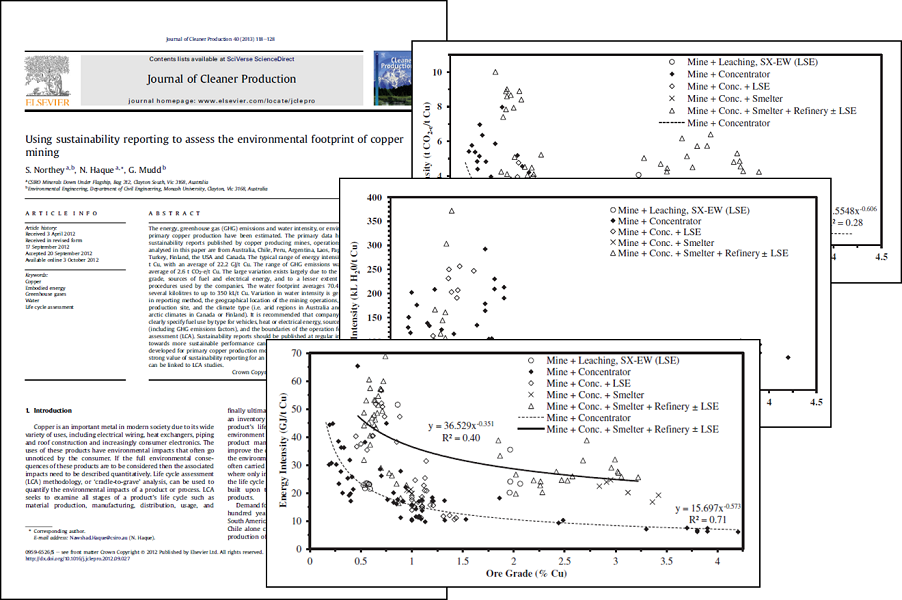
- Mining’s climate footprint is larger than the sector reports, and grows as grades fall. Greenhouse gas emissions from primary mineral and metal production were equivalent to about 10% of global energy-related emissions in 2018. In Chile, fuel use per unit of mined copper rose 130% and electricity use 32% between 2001 and 2017, largely due to declining ore grades (Nature Geoscience, 2020). Energy use and emissions of mines are highly variable and there has been significant inconsistency through time in how industry has disclosed this information (Journal of Cleaner Production, 2013).
- Where we mine matters as much as how much. Extending the PEMMSS model to nickel showed that laterite deposits, near-surface ores typically beneath tropical forest, account for 78–83% of modelled supply to 2050, and that half of all mined nickel over that period threatens the top 10% of global land most critical for biodiversity and carbon storage. Avoiding those areas raises the risk of supply shortfalls (Nature Ecology & Evolution, 2026; PNAS, 2023).
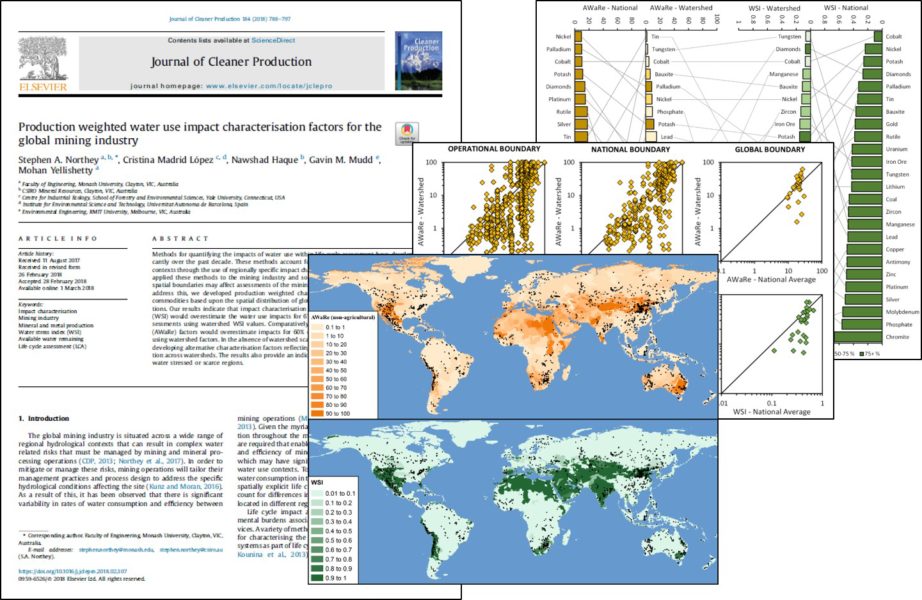
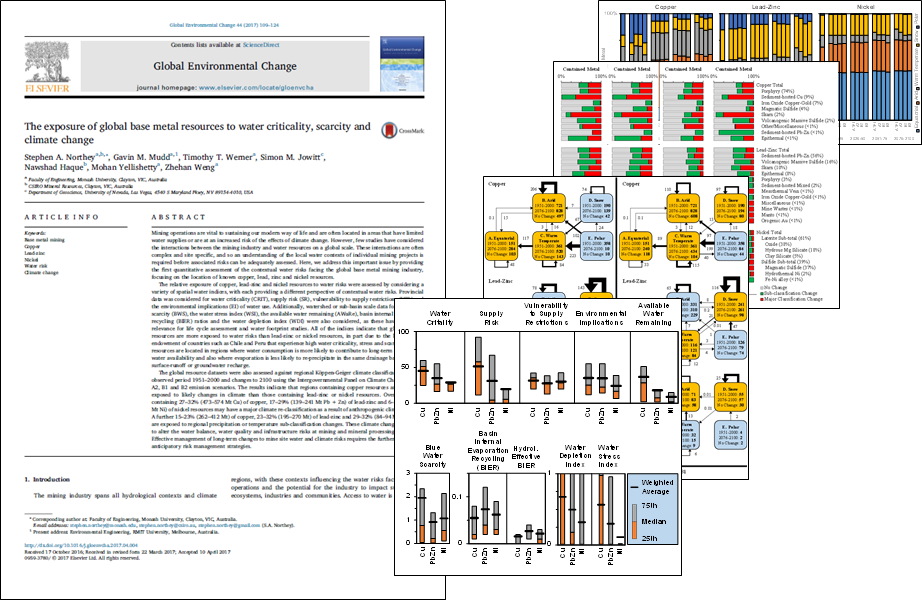
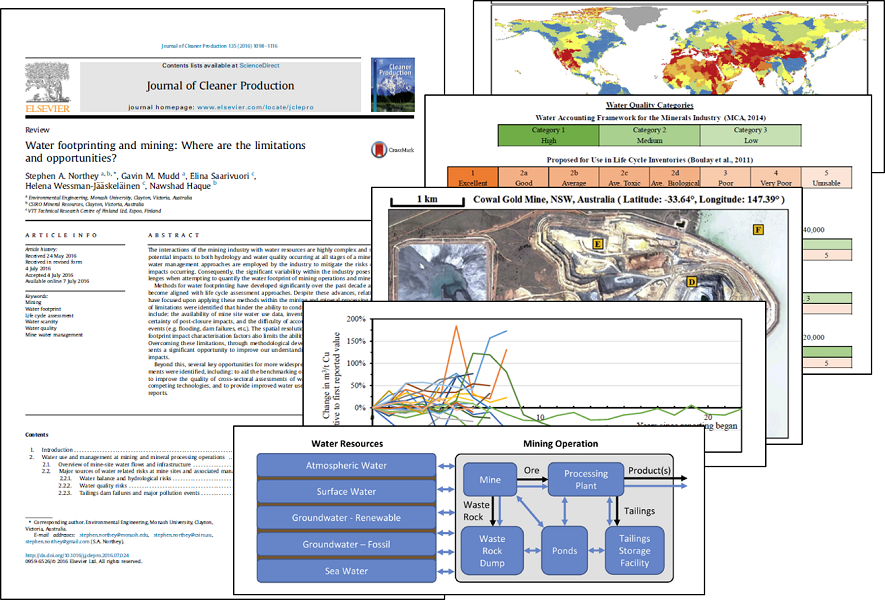
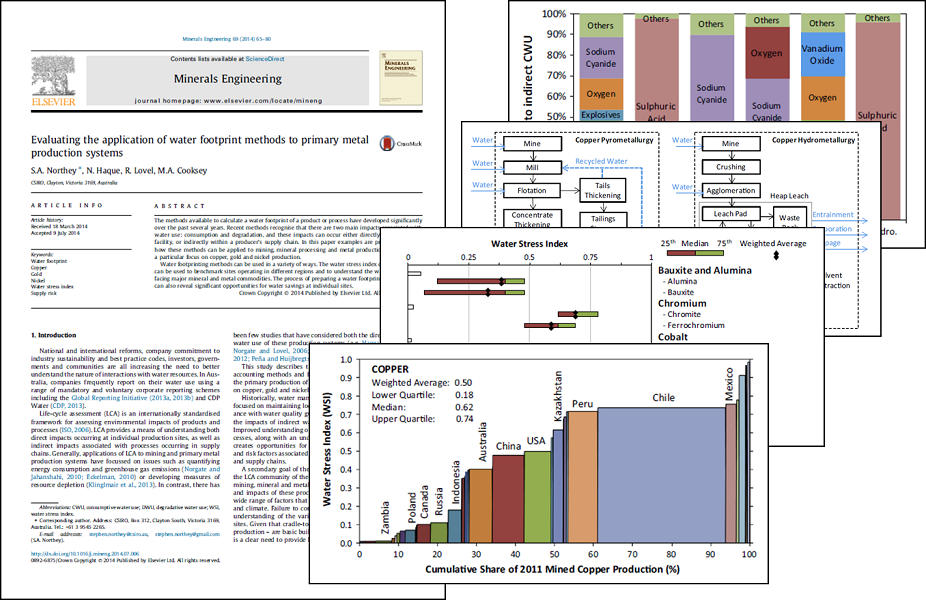
- The industry’s water problem is a location problem. The first quantitative global assessment of water contexts facing base metal resources found copper substantially more exposed to water stress and scarcity than lead-zinc or nickel, and producing copper mines sited in more water-stressed catchments than the deposits yet to be developed (Global Environmental Change, 2017). Detailed assessments of how global mineral production is distributed in relation to water scarcity have revealed that national average water scarcity factors are insufficient for assessing mining, use of watershed specific values is essential to ensure the accuracy of assessments (Journal of Cleaner Production, 2018). Alongside this, my work to understand the applicability of water footprinting methods to the mining sector has revealed key conceptual and practical limitations that must be overcome to enable effective benchmarking of industry performance (Journal of Cleaner Production, 2016).
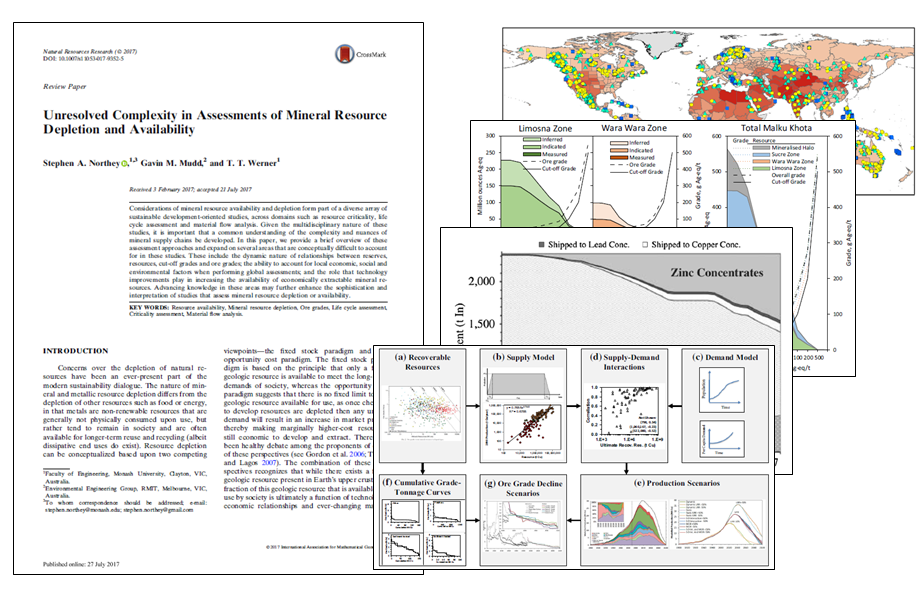
- Depletion and criticality assessments rest on assumptions that often don’t hold. Reserves are not a fixed stock and resources are not an inventory; treating them as either yields precise numbers that mean little (Natural Resources Research, 2018). I contributed to the UN Environment/Life Cycle Initiative guidance on handling mineral resources in life cycle impact assessment (IJLCA, 2020, Parts I and II). PEMMSS was partly a response to the same problem: if exploration and discovery are stochastic, our supply scenarios should be too (RCR Advances, 2023).
- Battery supply chains are expanding faster than they are being measured. Shifting mining and refining to renewable electricity could cut emissions intensity for battery-grade lithium, cobalt, nickel and graphite by 53–86% — though probably not enough to decouple emissions from EV-driven demand growth (Joule, 2024). Inconsistent treatment of co-products across industry LCA guidelines alone swings reported climate impacts by up to a factor of five for the same kilogram of material (IJLCA, 2025).
- Circularity helps, but the timing of it is the hard part. Reuse and recycling together cut cumulative battery emissions by 20–30% relative to either alone — yet extending battery life delays the secondary supply that recycling depends on, so the two goals actively compete (Environmental Science & Technology, 2026). In Australia, spent EV batteries could reach 500,000–900,000 tonnes annually by 2050, and recycling efficiency alone can shift recovered material mass by over 200% (Resources, Conservation and Recycling, 2026). Metals are among the most recyclable materials we have; that potential is nowhere near realised.
My career has spanned CSIRO, Monash University and, since 2019, UTS as a Chancellor’s Postdoctoral Research Fellow, Research Principal and now a Research Director at the UTS Institute for Sustainable Futures.
I’m a Chief Investigator of circAlloy (the ARC Training Centre for Resource Efficient Alloys in a Circular Economy) and also the ARC Discovery Project Ecologically responsible mining to fuel a green energy transition. I serve as Secretary on the Board of the Australian Life Cycle Assessment Society (ALCAS), and have contributed to UN Environment’s Life Cycle Initiative working groups on mineral resource impact assessment, as well as the International Working Group for Water Use in LCA (WULCA)’s work on the Natural Resources Area-of-Protection. I have completed contract research for government and industry, advised consultants to the mineral sector on how to approach technical challenges, and made public submissions to attempt to shape public policy.
My current focus areas are: long-term scenarios for battery mineral supply; the biodiversity consequences of copper and nickel mining under energy transition scenarios; material recovery from end-of-life batteries; and slowly building datasets the field is quietly missing.
I write here occasionally, model constantly, and remain suspicious of any number presented without its uncertainty.